


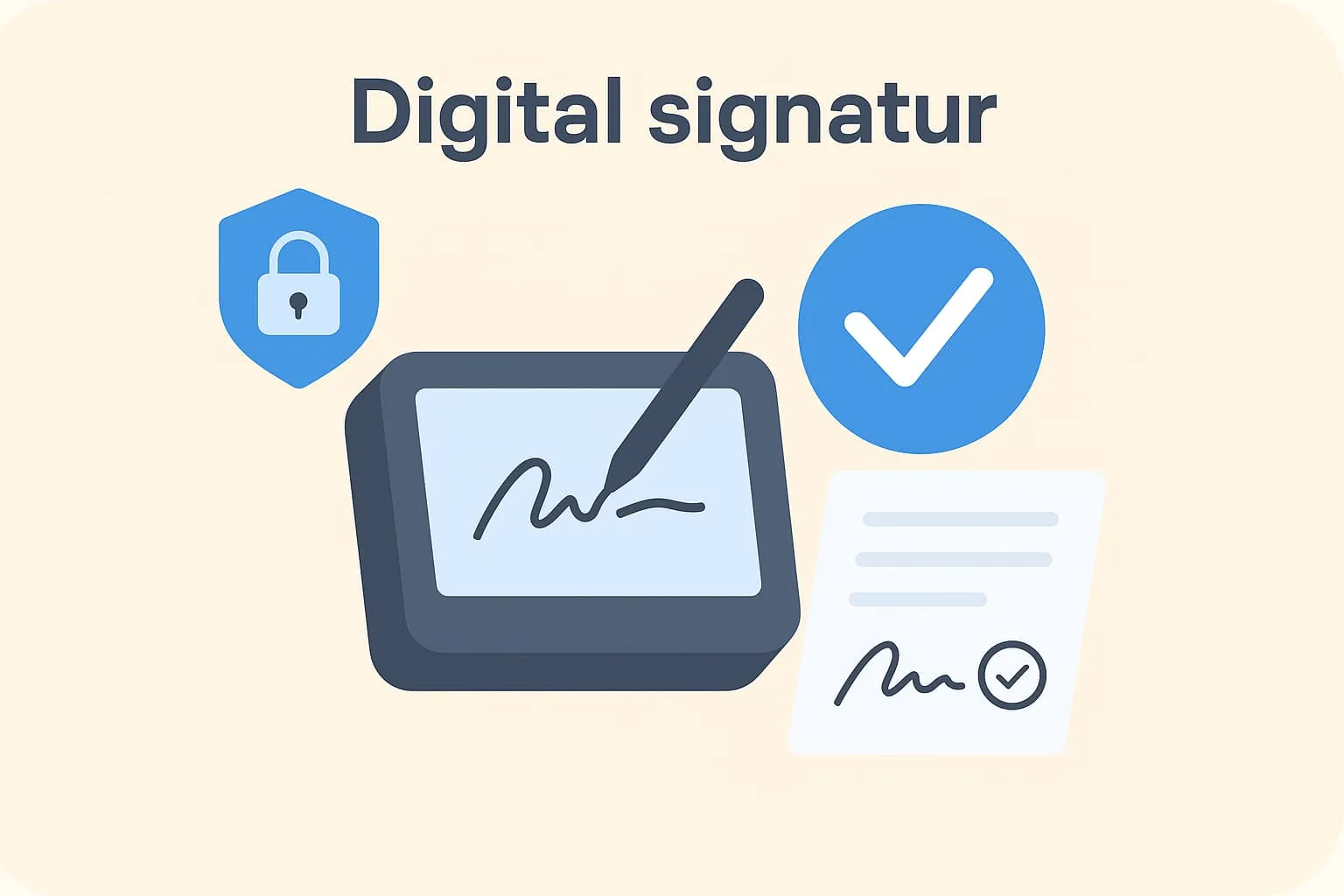
What is a digital signature?
A digital signature is a secure, unique code added to documents and transactions in a POS system to prove that they are genuine and have not been altered along the way. Just as a handwritten signature confirms that a person stands behind an agreement, a digital signature shows that data comes from a trusted source and is unchanged.
A digital signature is based on encryption, where information is locked with a private key that belongs only to the sender. On receipt, a matching public key is used to check that everything is correct – both the sender and the content.
Example:
A restaurant generates an electronic invoice for a customer. To make sure the invoice is accepted by both the customer and the authorities, a digital signature is added automatically via the restaurant's POS system. This way, both the customer and, if relevant, the tax authority can be sure that the invoice is genuine and has not been changed afterwards. See also: electronic invoice.
Why is it important?
When you run a restaurant or café and use a POS system, you handle a range of important transactions and documents every day – from receipts and invoices to time tracking and stock management. It is crucial that these documents are secure and that their origin is beyond doubt.
Digital signatures help you meet requirements for security, documentation and traceability – both towards your customer and the authorities. This is especially relevant when the POS system is integrated with other systems, such as accounting software or VAT reporting. Read more about integration if you like.
How does Flexybox use digital signatures?
In the Flexybox till and booking systems, digital signatures are used to validate transactions and ensure that documents such as invoices, receipts and digital time records are authentic and secure. This means that as a restaurateur you can serve your customers with confidence and keep control of operations, while complying with the law and protecting your business against fraud.
Frequently asked questions
The terms are sometimes confused, but a digital signature is a much more secure, encryption-based method of confirming that a digital message or document is authentic – it corresponds to a handwritten signature, but with higher security.
No, in most modern POS systems – such as Flexybox – it happens automatically in the background, so you don't need to do anything manually.
A digital signature ensures that the invoice has not been altered and comes from the right sender. It strengthens credibility, and some countries' e-invoicing or cash register rules require it.
Yes, it can be just as important for smaller cafés as for larger restaurants – especially if invoices are issued to businesses or the public sector, where secure documentation is required.