


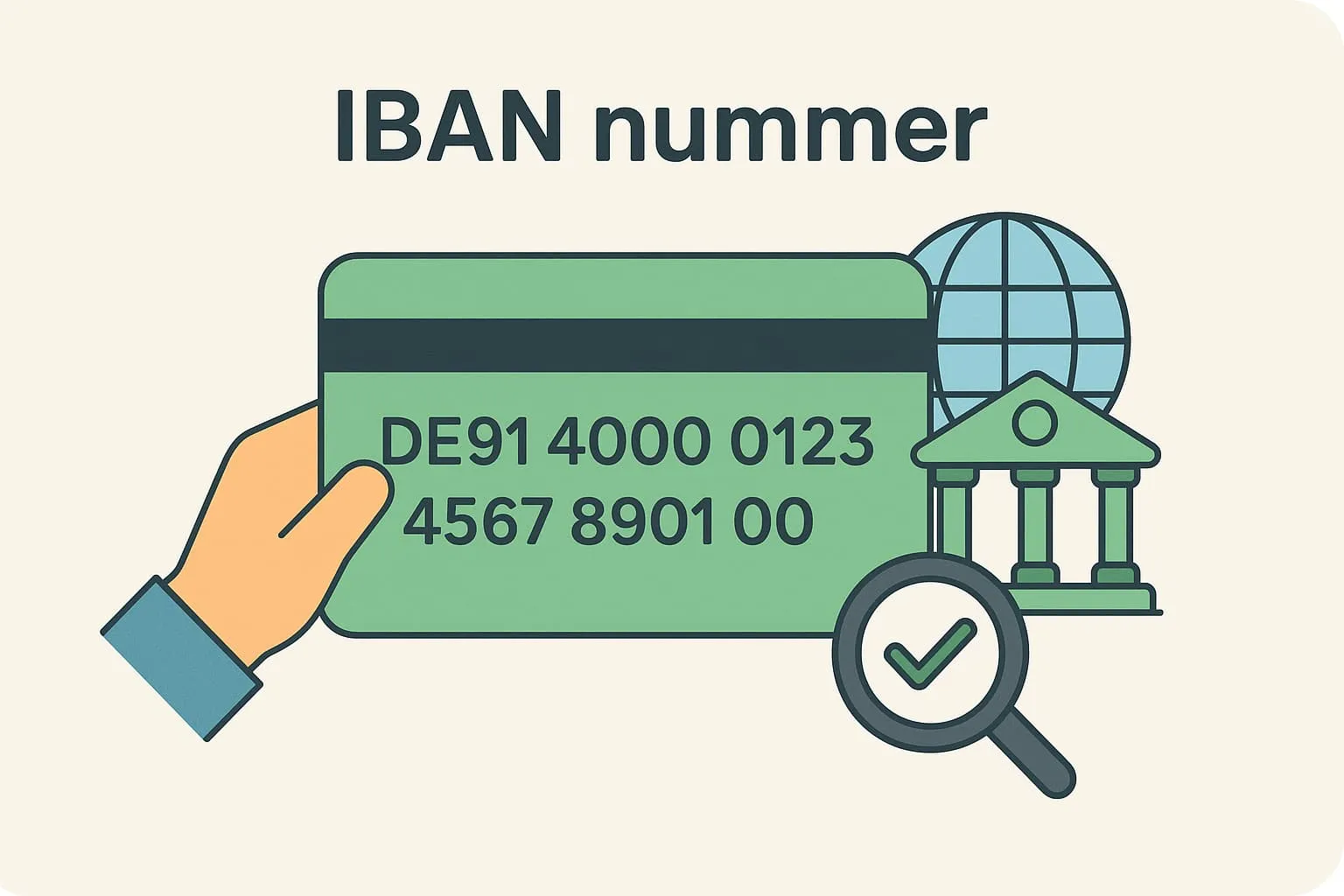
What is an IBAN number?
IBAN stands for “International Bank Account Number” and is an international standard for identifying bank accounts in different countries. An IBAN consists of a country code, two check digits and the bank account number itself. IBAN makes it easy and safe to send and receive international bank transfers, as it minimises the risk of errors when transferring money between countries.
The purpose of the IBAN is to make sure payments reach the right bank account – wherever in the world the recipient is. Every IBAN begins with a two-letter country code (for example “DE” for Germany or “DK” for Denmark), followed by two check digits and the national bank and account number.
IBAN is especially relevant when your restaurant or café receives payments from abroad or pays foreign suppliers – for example if you import wine from France or coffee from Italy.
Example in a restaurant or café context
Imagine you run a café and work with an Italian supplier of speciality roasted coffee. To pay your bill internationally, you are given the supplier's IBAN. You enter it in your online banking when making the transfer, so the bank knows where to send the money. Without a correct IBAN, the payment risks being delayed or returned.
Where do you find your IBAN number?
Your IBAN is shown in your online banking, typically under account details, and on your bank statements. The length differs per country – up to 34 characters. A Danish IBAN, for example, has 18 characters: “DK”, two check digits, a four-digit bank registration number and a ten-digit account number (example: DK50 0040 0440 1162 43).
Why it matters when you work with POS systems
Although an IBAN is mainly used for bank transfers and not directly in the POS system itself, it still matters to you as a restaurateur. When you receive a payment from abroad by bank transfer – for example from a customer or partner – you often need to provide your business's IBAN. In some cases this information must appear on invoices, receipts or in your POS system, especially if your system is linked to financial management or invoicing.
In other words, it is important to know your IBAN and understand when and how it is used – especially when working with your bookkeeper, suppliers or systems that integrate with the till.
How does the Flexybox system use IBAN numbers?
In Flexybox, the IBAN is typically integrated in connection with invoicing in either the POS system or the booking system. When you issue an invoice – for example for hosting a conference or a corporate event – the IBAN can automatically appear at the bottom of the invoice, so the recipient can easily make a bank transfer. This saves time and ensures the payment reaches the right bank account. Read more here: Payments in FlexyPOS
Related entries
Read also:
What is a credit card?
What is a payment card?
Frequently asked questions
No, the IBAN contains your account number, but also includes other information that makes it possible to identify countries and banks internationally.
It depends on the country. In the euro area (SEPA), the IBAN is used for both domestic and cross-border euro transfers. In some countries outside the euro area, such as Denmark, domestic payments normally only need the bank registration and account number, and the IBAN is used for cross-border payments.
You can find the IBAN by logging in to your online banking or contacting your bank. It is usually also shown on your bank statements.
Yes, in the Flexybox POS and booking system the IBAN can be added automatically to invoices when payment by bank transfer is needed. This makes it easier for the payer to send money correctly.