


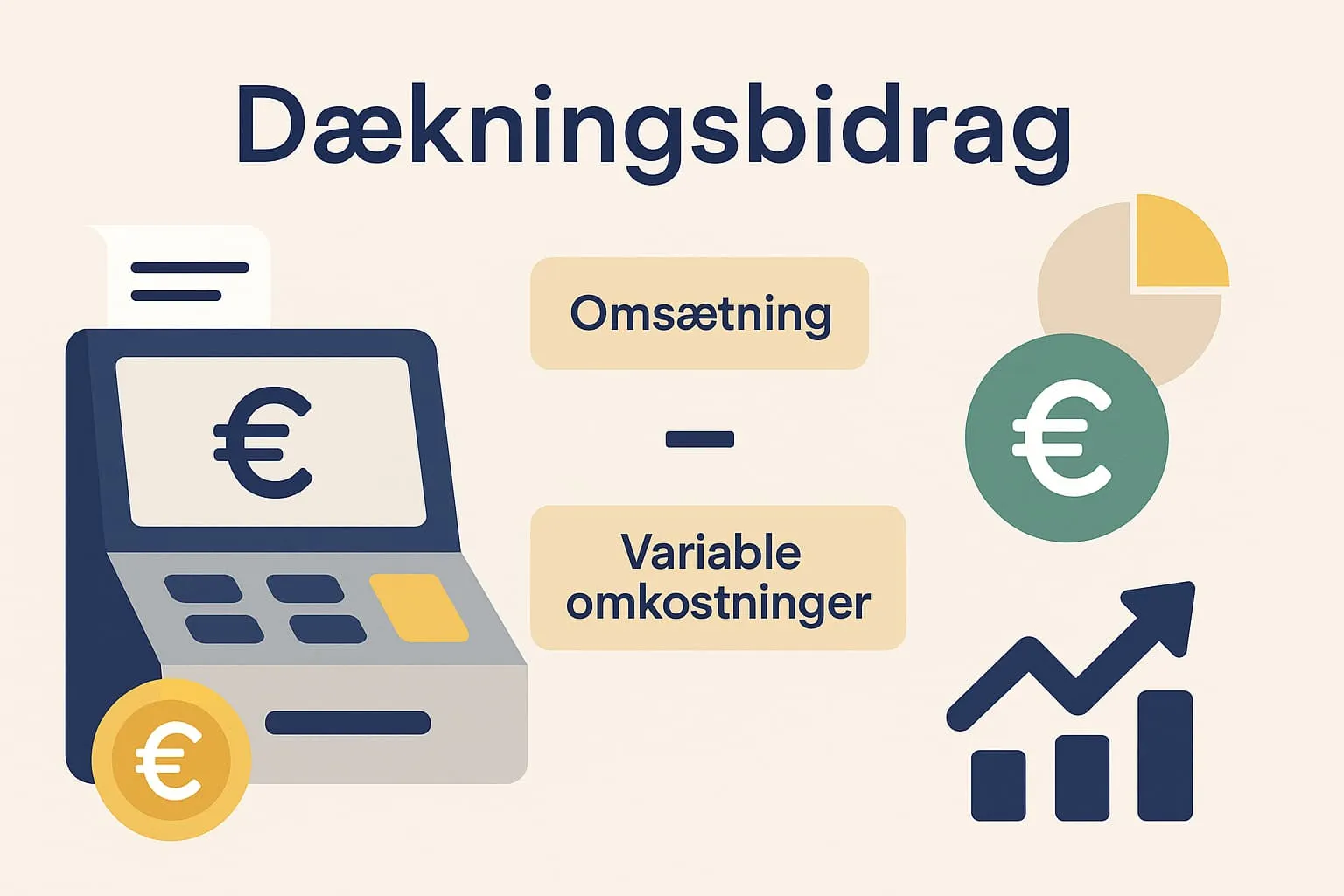
What is contribution margin?
Contribution margin is the difference between an item's selling price and its variable costs. It is how much money your restaurant or café has left of total revenue once you have paid for, e.g., ingredients and other costs that depend directly on sales.
The formula is:
Contribution margin = Selling price – Variable costs
Unlike fixed costs (such as rent and wages), variable costs change with how much you sell. That is why the contribution margin tells you how well an item contributes to total earnings as production and sales rise or fall.
Example from a restaurant/café:
Imagine you sell a classic burger for €16.
The ingredients – bun, meat, cheese, greens etc. – cost you €6 per burger.
Contribution margin = €16 – €6 = €10
The €10 is the amount you can use to cover your fixed costs and make a profit. A high contribution margin ratio (the margin expressed as a percentage of the price) is a sign that your pricing or your product is profitable.
Why is contribution margin important in a POS system?
A modern POS system (till system) helps you keep track of contribution margins across your items and product categories. It gives you insight into which items are most profitable and which may need to be reconsidered.
When you see that a particular drink has a low contribution margin, you can consider adjusting the price or changing the recipe to improve your profit. This gives you better control of operations and makes it easier to manage your finances actively.
Contribution margin in Flexybox
In the Flexybox till system, contribution margin is calculated as revenue minus variable costs. You can easily see the contribution margin at item, group and shift level. This means you can quickly identify which items or times of day generate the most or least profit. It gives you a solid basis for optimising your pricing and business strategy. You can also compare it with your average cost price and use the knowledge from your POS system to make even better decisions. Read more here: Track cost of goods and contribution margin in FlexyInventory
Read more:
Frequently asked questions
It depends on the concept and prices, but a rule of thumb is that your dishes should have a contribution margin of 60-70% of the selling price. The higher the better – as long as customers still feel they get value.
Yes, especially for your best-selling products. Knowing the contribution margin lets you make sure you focus on the items that make your business a profit.
Contribution margin only looks at what is left after variable costs. Profit is what remains after all costs – both fixed and variable – have been paid.
You can raise the price, negotiate better ingredient prices or change the recipe so it is cheaper to produce – without compromising on quality.